- If more than 20% to 25% of the fence is heavily damaged, replacing it is a better option.
- Even good repairs can fail if the majority of the fence has been patched over and over again.
- Strengthening one section by repairing it can cause weaker adjacent sections to crack and possibly collapse.
Your property’s fence is like any other structure. No matter how well-built it is, and no matter how good the materials or installation are, eventually it will start needing a lot of repair. You’ll face what’s known as the “patch it or pitch it” moment. Should you replace or repair your fence?
Our goal here is to help you determine if your fence is still worth repairing or if it’s time to start looking at a full fence replacement that fits your budget. Honestly assessing the true condition of the fence can save you money and stop the fence from collapsing.
The 25% Rule: A Simple Litmus Test
There’s a professional rule of thumb that states if more than 25% of the fence is damaged, then replacing it is the better choice. If the damage you see is severe, then you may want to consider replacement if the damage affects 20%. Look at the entire fence, including posts, boards, and rails.
Replacing the whole fence sounds expensive. However, you’re likely spending a much larger amount of money on repair overall than you’d spend on a new installation with a warranty.
Check the Foundation: It’s All About the Posts
Without strong posts, the fence won’t hold up. You can replace a broken fence panel, but if the post itself is rotten or cracked, that new rail won’t stay in good condition for long.
How to test a post for stability:
- Look at the base of wood posts to check for rotting areas.
- Carefully look at the posts from all angles to see if any are leaning or look like they’re about to break.
If you find multiple posts that are rotting, loose, or otherwise in bad shape, that means the posts’ foundations are gone. In that case, replacing the fence is the best choice instead of fence post rot repair.
Material-Specific Warning Signs
Wood Fencing: Rot and Pests
Should you repair or replace your wood fence? Check wood posts, rails, and other parts for tunnels dug into the wood; those are signs of a termite infestation. Also, look for signs of rot. Finally, check posts and rails from different angles to see if they’re splintered or warped.
If you see one damaged panel, post, or middle/top rail, repair. However, if you see that the bottom rail is soft and crumbling, then the whole fence needs to be replaced. If you want another wood fence, look for woods that are naturally rot-resistant.
Vinyl Fencing: Cracks and Discoloration
When vinyl fencing material is exposed to UV rays, the material starts to break down. Vinyl can also crack due to impacts from things like hail or falling branches. Extensive discoloration and more than one cracked panel indicate replacement is necessary.
Also, reassess the reinforcements inside the posts. Look at the posts to see if any appear to be sagging or bowing even slightly.
Metal & Aluminum Fencing: Rust and Welds
Metal fences have three main warning signs. One is weld damage; if the welds are crushed, cracked, or otherwise damaged, at a minimum that section needs replacement. The second sign is impact damage or severely dented metal.
The third warning sign is rust. There’s surface rust, where something came into contact with the metal and left a rusty stain, and then there’s structural oxidation that eats into the metal.
Try cleaning the rust off; if the metal underneath is intact, then this is likely surface rust. Clean the rest of it away. But if you see divots in the metal, you’re dealing with oxidized metal that needs to be replaced.
Avoiding the “Band-Aid on a Bullet Wound”
When you repair damage, you’re putting a bandage on the fence. When you repair an older fence with extensive damage, you’re placing that bandage on a gushing wound. You might slow the deterioration of the fence, but not for long. You’ll end up paying for a new fence anyway, making those repairs a poor investment.
Quick Decision Matrix: Repair vs. Replace
Signs You Can Probably Repair
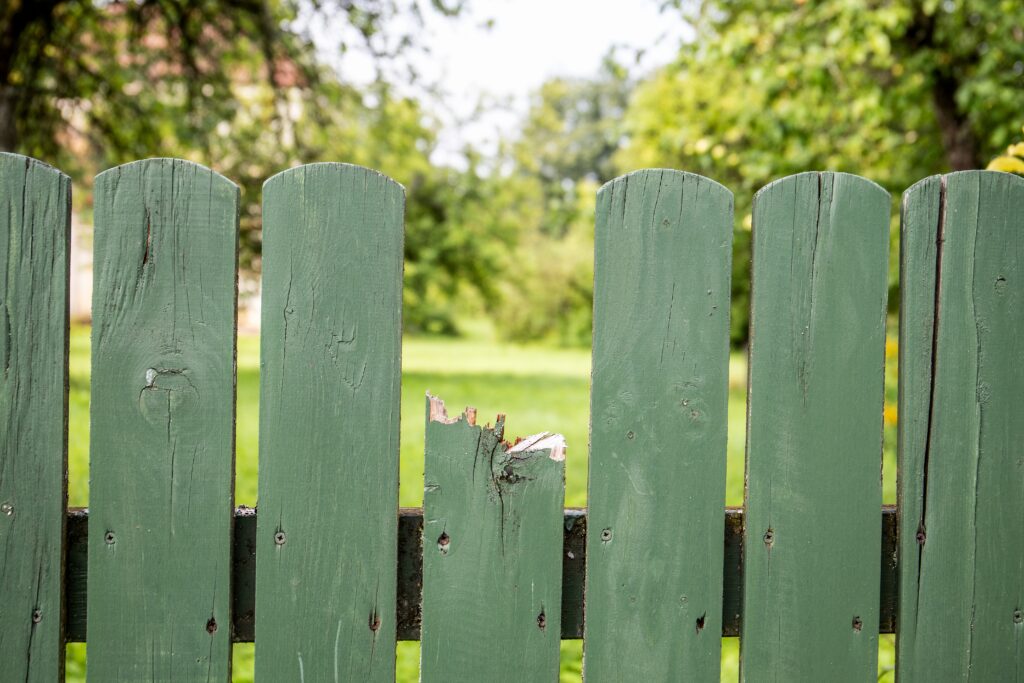
- Single picket with damage like cracks or splitting
- Single gate hinge or latch with damage
- Surface mold
- Surface rust that hasn’t eaten into the metal
- Mild discoloration that doesn’t affect much of the fence
- Isolated impact damage, say, on one panel
Signs It’s Time to Replace
- Multiple posts are leaning or have areas of rot
- More than 25% of the fence has damage
- Extensive warping, sagging, or splintering
- Visible insect damage
- Spots on wood fences that are soft
Get a Professional Perspective
There’s value in having an expert eye take a look at the fence. Sometimes the exterior of the fence seems acceptable, while damage hides underground or within the rails and posts. You can also get a fence replacement estimate.
Still not sure? The best way to know is with a professional opinion. Schedule a free, honest fence assessment. We’ll help you decide whether a repair or replacement makes the most sense for your home and budget.
Image credit: // Shutterstock // stoatphoto
