Meeting Safety and Code Requirements for Community Pool Fencing (HOAs & Apartments)
For HOA boards and apartment property managers, a community pool is a premier amenity—but it is also a significant liability. In 2026, staying ahead of pool fencing regulations in Virginia and Maryland isn’t just about passing inspections; it’s about resident safety, legal protection, and risk reduction. Understanding the important requirements that keep communities secure and compliant will help your HOA or apartment community choose a fencing company to meet these requirements with confidence.
Quick Takeaways
- Gates cause most failures: Self-closing, self-latching gates are one of the most common inspection issues—and the easiest to fix proactively.
- Height isn’t universal: While 48 inches is common, some municipalities require 60 inches—local codes matter.
- Material affects compliance: Non-climbable aluminum reduces risk and maintenance compared to chain link or wood.
Safety, Liability, and Peace of Mind
A code-compliant pool fence is your primary protection against unauthorized access and tragic accidents. For HOAs and apartment complex owners, compliance also directly impacts insurance eligibility, exposure to fines, and potential litigation. Boards carry a duty of care to meet state and local standards, which are often derived from international model codes, to protect residents and demonstrate due diligence. Safety guidance from the U.S. Consumer Product Safety Commission reinforces this responsibility, noting that proper barriers act as an additional layer of protection in reducing the risk of child drownings.
Key Code Requirements: A Summary of Safety Standards
While local ordinances vary, most commercial and community pools in Virginia and Maryland follow standards rooted in the International Code Council (ICC) and legacy BOCA provisions. Common requirements include:
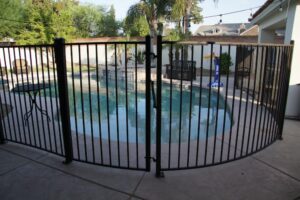
- Minimum Height: Often 48 inches, with some jurisdictions requiring 60 inches, in order to deter climbing.
- Non-Climbable Design: Vertical pickets with no more than 4 inches of spacing to prevent children from slipping through or gaining footholds.
- Self-Closing & Self-Latching Gates: Gates must close automatically and latch securely every time.
- Outward-Swinging Gates: Gates typically must swing away from the pool area.
- Latch Height: Latches must be mounted high enough to remain out of reach of small children.
For up-to-date references, municipalities often point to ICC guidance and local amendments; property managers should verify requirements with their county building department or state resources, such as the ICC’s International Swimming Pool & Spa Code.
Best Material Choices for Commercial Pools
Aluminum (Top Recommendation)
- Durability: Rust-proof and resistant to pool chemicals and humidity.
- Security: Strong, non-climbable profiles without obstructing sightlines.
- Aesthetics: Clean, professional appearance that enhances property value.
Vinyl (Solid Alternative)
- Privacy: Ideal for pools near residential buildings or streets.
- Low Maintenance: No painting or sealing required.
- Sturdy Barrier: Meets code when properly designed and installed.
The Long Fence Advantage: Guaranteed Compliance
At Long Fence, we aren’t just installers—we’re code experts. Long Fence designs and installs community pool fencing to meet local requirements and exceed standard expectations. We ensure each project is inspection-ready the first time. Our team stays current on municipal changes and local nuances, helping boards avoid costly rework, delays, and compliance gaps.
Don’t Leave Safety to Chance
Compliance isn’t about passing an installation inspection. Keeping your community safe is a year-round responsibility. Whether you are planning a new installation or upgrading an aging enclosure before swim season, acting early protects residents and reduces liability. The right perimeter is the foundation of pool safety and offers peace of mind to your board and your residents.
Ensure your community pool is safe, compliant, and beautiful. Don’t wait for a failed inspection or a safety concern. Contact the Long Fence commercial team today for a free pool code compliance evaluation and estimate. Get Your Compliance Evaluation Today!
Photographer: Shannon Jordan / Shutterstock
